
.svg)
Read now
Read now

Discover Cases
Discover
Management Summary
Shifts in user online search behavior favor AI systems
Websites must be optimized for AI to remain discoverable
Communication must be readable not only by humans but also by machines.
Visibility in the age of AI search requires different prerequisites than classic web search. Increasingly, aspects of personal life, such as booking a hotel for an upcoming vacation, are falling under the purview of AI systems. Hotels must prepare their digital presence accordingly to ensure continued relevance.
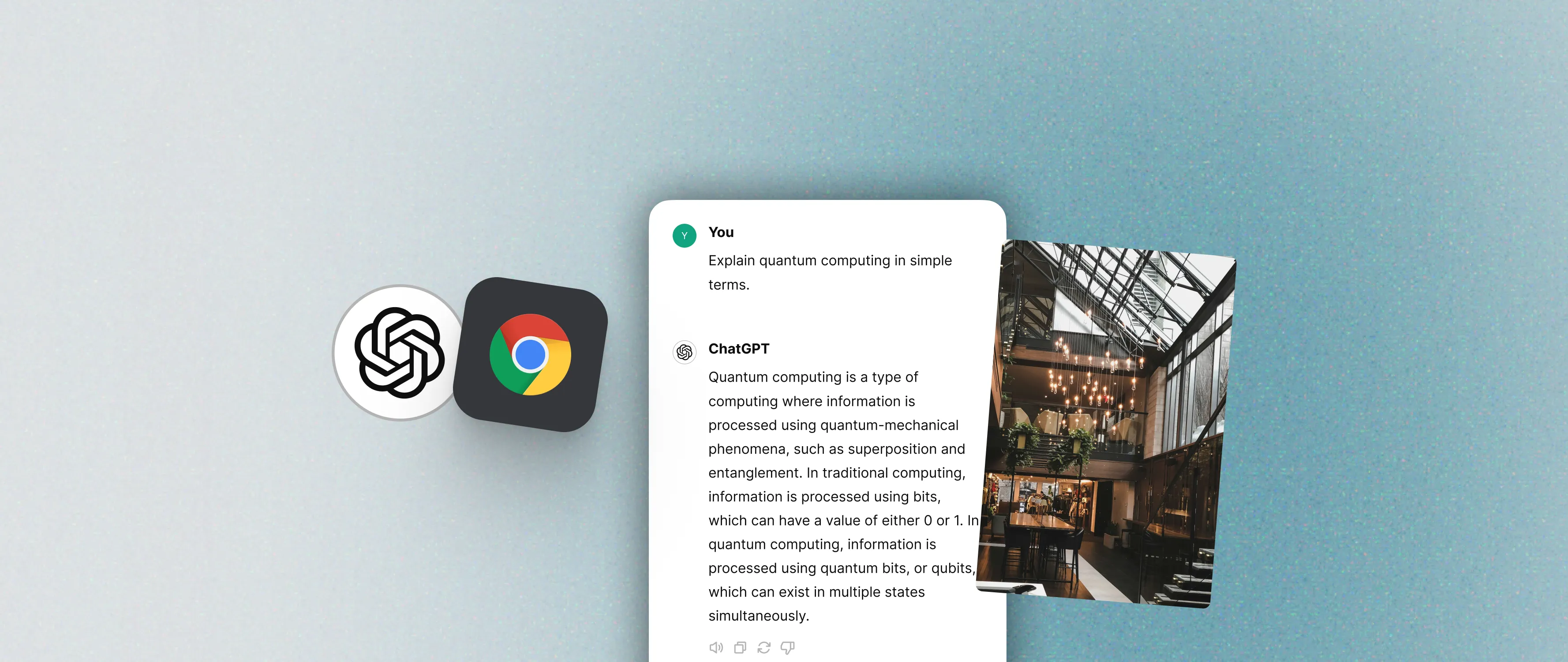
Hotel searching is undergoing a fundamental shift. Where travelers once searched for suitable accommodations on Booking.com, Google, or Expedia and worked their way through numerous results, a single query to an AI is now increasingly sufficient, such as: "Find a suitable hotel for a couple with a budget of 200 euros per night that is within walking distance of a landmark."
The AI provides a curated selection, often including concrete booking options. This significantly shortens the journey from inspiration and research to booking. For hotels, this creates a new playing field: the position in a search engine is no longer necessarily the deciding factor; instead, it is whether a hotel is understood, recommended, and selected as a relevant option by AI systems.
From SEO to AEO: AI provides answers instead of search results:
AI systems like ChatGPT, Perplexity, or Google's AI Overviews work differently than classic search engines. They analyze information from various sources, synthesize it, and answer concrete, context-rich questions. In doing so, they draw on hotel websites, review platforms, booking portals, local directories, and social media, among other sources.
This also changes the logic of optimization. Answer Engine Optimization (AEO) is not primarily aimed at individual keywords or entire websites, but at concrete, individual pieces of content that an AI can pick up as an answer to a user's question. Hotel information must therefore be clear, precise, up-to-date, and understandable in various contexts.
For operators, this means: a beautiful website alone is no longer enough. The decisive factor is whether an AI can reliably identify, for example, where the hotel is located, who it is suitable for, what amenities are available, how far it is to relevant landmarks, and what booking conditions apply.
Visibility is created across many digital touchpoints:
A look at Google Gemini shows how this development can already function in practice. For hotels, Gemini draws on the Google Travel Graph, the same database used by Google Hotels. The AI can recommend a hotel and then redirect the user to Google Hotels, where direct rates, metasearch partners, and OTAs like Booking.com or Expedia are available. Hotels represented via Google Hotel Ads can appear directly in Gemini results.
At the same time, booking platforms remain important touchpoints. However, they should increasingly be viewed as showcases and reach channels should be understood – while your own website strengthens the direct relationship with guests and, consequently, direct bookings. One possible strategy is to leverage the visibility of OTAs while simultaneously offering concrete benefits for booking directly on your own website.
AI systems do not just evaluate the hotel website. They cross-reference information from various sources. Conflicting details on your own website, Google, Booking.com, or review portals can therefore become a problem. A consistent and up-to-date digital presence is a crucial foundation.
What can hotels do now in concrete terms?
Make information machine-readable:
The most important hotel data should be structured and clearly available. This includes address and contact details as well as room categories, amenities, services, price ranges, availability, and booking conditions. Schema.org markup helps make this information clearly interpretable for machines.
Especially important: information should not be hidden exclusively in images, videos, or complex web applications. What works visually for guests is not automatically readable for AI. For example, a restaurant should not just be photographed, but also described in text with opening hours, offerings, and special features.
Develop content for real questions:
Instead of relying solely on classic SEO terms, hotels should create content for specific guest questions. A comprehensive FAQ can, for example, answer what activities are possible in the area during bad weather, whether child-friendly areas are offered, or how far away the nearest supermarket is.
The rule here is: be clear rather than promotional. "Our spa features a 15-meter indoor pool, a Finnish sauna, and three treatment rooms" provides an AI with significantly more usable information than general phrases like "exquisite wellness facilities."
Create a single point of truth:
Hotel information should be managed centrally and regularly synchronized with all relevant platforms. This includes Google, Booking.com, TripAdvisor, and your own website. Reviews are also gaining importance. In addition to facts, AI systems are increasingly taking reputation, guest feedback, and experiences into account. Review management is therefore not just a matter of image, but part of digital visibility.
Regularly test your own AI visibility:
A sensible first step is to test typical guest questions in various AI systems: Is your hotel mentioned? In what context? What information is displayed? Which competitors are recommended? And what sources does the AI rely on?
A hotel might appear prominently for one query but be ignored for a similar one. That is why AEO requires continuous monitoring rather than a one-time optimization.
The old ways aren't disappearing, but roles are changing:
This development does not mean that classic SEO measures or your own website are becoming obsolete. On the contrary, they remain an essential foundation. However, their function is changing. The website must not only be attractive to humans but also provide information in a way that AI systems can reliably understand and categorize.
This creates a new digital task: those who structure their data today, consistently align content with real guest questions, maintain platforms, and regularly check their visibility in AI systems are laying the foundation for the next generation of hotel search.
CONCLUSION
The future of hotel searching is increasingly being shaped by AI. This is why hotels must adapt their digital presence, placing greater emphasis on structured data, consistent content, and AEO alongside traditional SEO. Those who keep their data up to date, answer genuine guest questions, and regularly monitor their visibility within AI systems will build a vital foundation for remaining visible and relevant in this new era of hotel discovery.
Book a consultation
Have a unique challenge?
Discuss your
project
Contact us and let's discuss your project.
Explore our services
Discover our services in strategy, branding, web design, and social media.
AI systems shorten the journey from inspiration and research to booking. Instead of comparing countless search results, travelers can specify their exact requirements and receive a curated selection of suitable hotels in return.
Hotel information must be clear, precise, and up to date. This includes details such as location, amenities, room categories, services, and booking terms. It is also essential that this information remains consistent across all digital platforms.
Hotels can tailor their content more effectively to address specific guest questions, provide key information in a structured format, and keep their details up to date across all platforms. In addition, they should regularly monitor how the hotel is represented and recommended by various AI systems.
Share this article.


amce studios GmbH is an owner-managed digital agency based in Darmstadt. Since its founding, its customers have included large and medium-sized companies, aspiring start-ups and ambitious new founders from the technology, energy, environment, retail and fashion industries. As a full-service agency, customers are supported regionally, nationwide and worldwide in all areas related to web experience, branding, social media and 3D design. amce studios GmbH is part of the amce Studios Group.
Latest news & insights
by amce studios.
Contact
Start your project with amce studios now and we look forward to receiving your inquiry.

As digital natives, we are experiencing trends. As academics and industry experts, we know the tried and tested. This unique combination turns small moments into great experiences. Our solutions are therefore up to date and yet timeless.