
.svg)
Read now
Read now

Discover Cases
Discover
Management Summary
Generative AI is fundamentally changing how people find information—search engines are becoming answer engines
Companies must create content so that AI models preferentially use, cite, or reference it
GEO is becoming a strategic tool for visibility, brand management, and digital reach
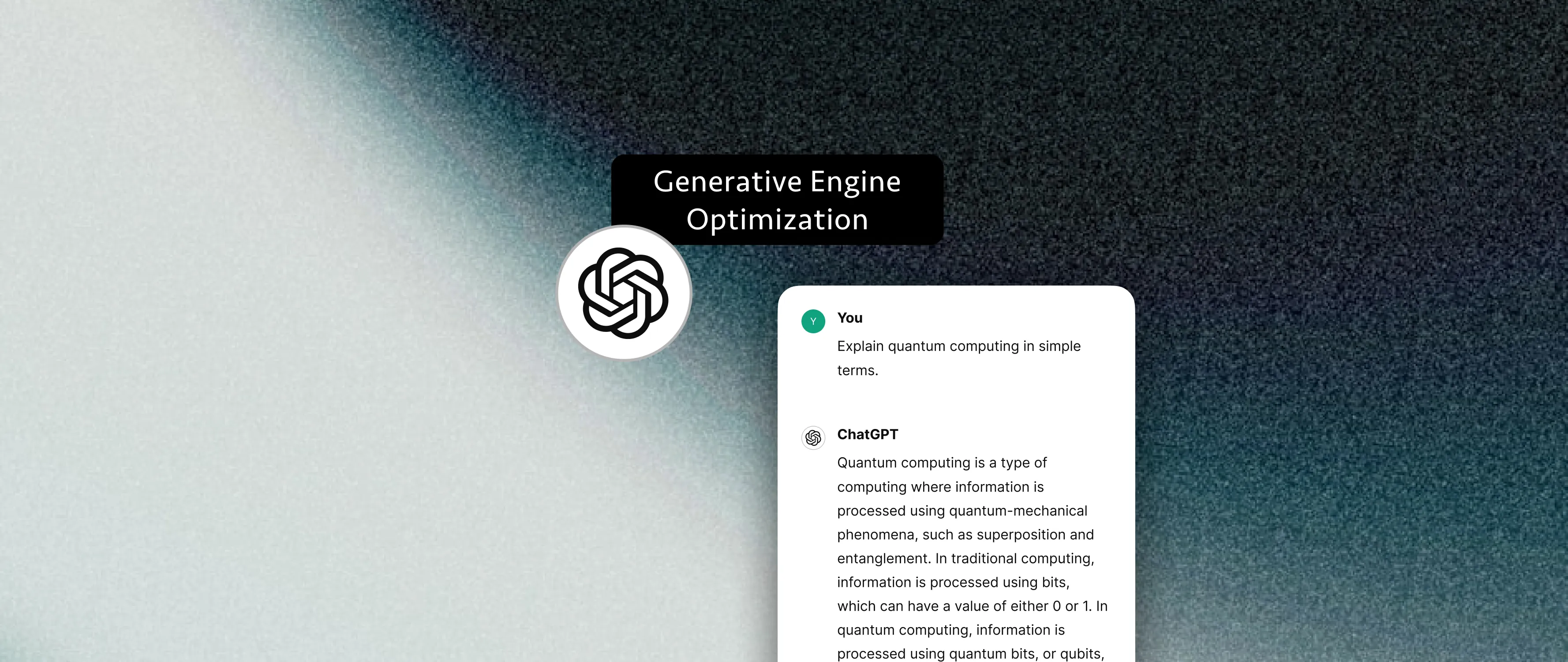
Digital content is currently undergoing a fundamental transformation: moving away from the traditional search engine toward the generative answer engine. Whether it’s ChatGPT, Google Gemini, or Perplexity, more and more users are asking questions directly to AI models, which no longer just link information but summarize and present it directly.
What this means for companies, brands, and media outlets:
The traditional approach of Search Engine Optimization (SEO) alone is no longer sufficient. To be found by potential customers, clients, or journalists in the future, businesses must familiarize themselves with a new concept: Generative Engine Optimization (GEO).
From SEO to GEO – A paradigm shift in the digital space:
While SEO focuses on optimizing content to rank well on Google search results, GEO has a different goal: creating content that generative AI systems can recognize, process, and incorporate into their answers. Rather than merely achieving a high search ranking, the aim is to become a trusted source for answers.
Content that machines understand and users trust:
GEO principles are closely tied to the capabilities and limitations of generative systems. AI models favor content that is clear, structured, current, and trustworthy. GEO therefore emphasizes approaches such as:
“For corporate websites, GEO provides clear recommendations for action. Product pages benefit from well-structured FAQ sections. Blog articles and news pages should be regularly updated and content-rich. Pages featuring team profiles, project descriptions, or process explanations are especially valuable when clearly written, properly marked up, and understandable. GEO is not just optimization—it is also responsibility: for the quality of information, the visibility of the brand, and the trust that comes from it,” says Cedric Coors, Founder of amce studios GmbH.
New visibility, new responsibility:
GEO is more than a buzzword. It represents the next step in the evolution of digital visibility. Companies that understand and implement GEO secure a place in the next major ecosystem of information delivery—the world of AI-powered assistants.
For brands, this also means that transparency, quality, and consistency are more important than ever. AI models are selective and only cite sources they consider trustworthy. Missing citations, vague statements, or poorly maintained websites lose relevance, even if they rank well from an SEO perspective.
CONCLUSION
The media landscape is in flux, and GEO is a clear indicator of this shift. For companies and brands, it is now essential to align content strategies not only for humans but also for machines. GEO challenges us as a digital agency to rethink content, clarity, and structure. We no longer design solely for human users and their capabilities, but for an entirely new intermediary standing between consumers and content.
Book a consultation
Have a unique challenge?
Discuss your
project
Contact us and let's discuss your project.
Explore our services
Discover our services in strategy, branding, web design, and social media.
Generative Engine Optimization, or GEO for short, refers to the optimization of content and brand presence for AI-powered search systems and generative models. The focus here is no longer just on ranking in search results, but on whether and how a brand appears in AI-generated answers. This requires semantic clarity, structured data, consistent brand information, and a strong presence on third-party platforms.
Unlike SEO, GEO does not primarily focus on rankings, but rather on ensuring that AI systems recognize, understand, and utilize content in their responses. Content must be clear, structured, trustworthy, and machine-readable to appear in AI-generated answers.
Clear structures, precise statements, and trustworthy, up-to-date content are essential. Short paragraphs, clear headings, FAQ sections, and verifiable sources can improve readability. Structured data, clean HTML, and regularly updated content also help make information more accessible and easier for AI systems to interpret.
Share this article.


amce studios GmbH is an owner-managed digital agency based in Darmstadt. Since its founding, its customers have included large and medium-sized companies, aspiring start-ups and ambitious new founders from the technology, energy, environment, retail and fashion industries. As a full-service agency, customers are supported regionally, nationwide and worldwide in all areas related to web experience, branding, social media and 3D design. amce studios GmbH is part of the amce Studios Group.
Latest news & insights
by amce studios.
Contact
Start your project with amce studios now and we look forward to receiving your inquiry.

As digital natives, we are experiencing trends. As academics and industry experts, we know the tried and tested. This unique combination turns small moments into great experiences. Our solutions are therefore up to date and yet timeless.