
.svg)
Read now
Read now

Discover Cases
Discover
Management Summary
What really lies behind the biggest shopping event of the year — and why AI is changing the game
Positive reinterpretation of a historical term
Strategic use of psychological effects
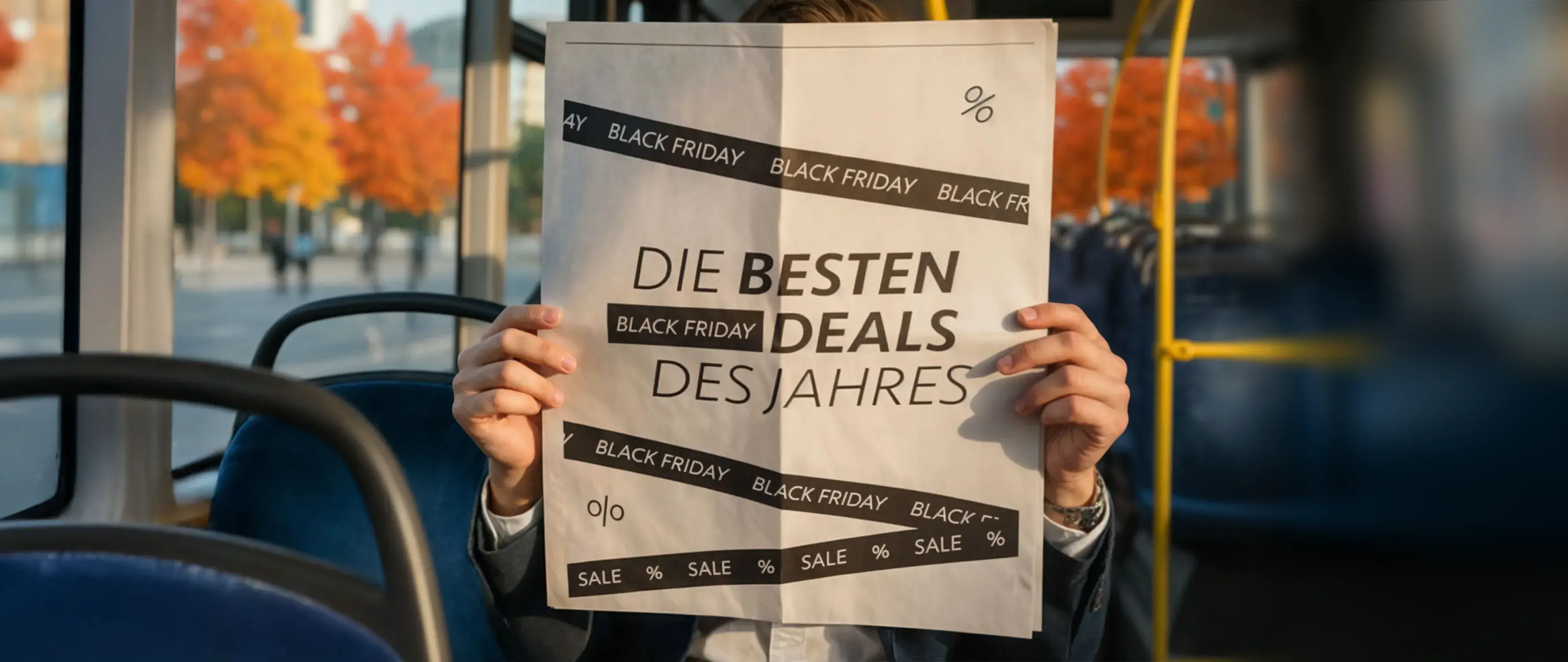
Every year at the end of November, the world slips into a shopping frenzy. Discounts flash across every screen, newsletters promise ‘the best deals of the year,’ and social-media feeds overflow with product recommendations. Originally a U.S. phenomenon, Black Friday has long since turned into a global consumer event.
The origins of Black Friday:
Originally, the term referred to the disastrous crash of the New York Stock Exchange in the late 1920s. Later, it was also used to describe the chaos in American downtowns on the day after Thanksgiving, which traditionally marks the start of the Christmas shopping season. Eventually, however, retailers gave the term a positive spin: a day of chaos became a day of consumption. By now, an entire shopping universe has emerged from it—Black Week, Cyber Monday, and in some cases even a full Cyber Month in November. Online stores and brick-and-mortar retailers compete with ever more aggressive deals. But are the discounts really as good as they look?
The psychology behind the discounts:
Black Friday works because it triggers our emotions, not our rational thinking. Companies deliberately rely on psychological strategies. The fear-of-missing-out effect pushes us to buy quickly when we see countdown timers, limited stock, or the sense that we might miss out on something. Likewise, a product that used to cost €199 and is now ‘reduced to €129’ looks like a mega-deal—even if its real market price is lower elsewhere. And then there’s the reward effect: buying releases dopamine. Especially in stressful times, people seek emotional rewards—and that’s exactly what discount marketing is designed to target.
When AI becomes a shopping advisor:
By 2025, Black Friday is no longer purely human. With AI assistants, it’s easier than ever to find products—or even have them purchased automatically. These digital advisors filter deals, compare prices, and recommend products, sometimes more precisely than traditional advertising. At the same time, brands have integrated AI into their own strategies. Dynamic pricing adjusts in real time to demand, competitor prices, and inventory levels. Personalized advertising addresses shoppers individually, based on browsing behavior, preferences, and even mood. AI content generators produce product descriptions, reviews, and ad copy in a matter of seconds.
Learn more about how brands use psychological strategies to create desire and trigger buying impulses in this blogarticle.
CONCLUSION
Raika Djalili-Baleh, Junior Advisor at amce studios GmbH, comments:‘Black Friday has long been more than just a day for bargains — it’s a reflection of our modern consumer behavior. Yes, the flood of discounts is huge. But consumers today are more informed, more critical, and more strategic than ever before. They compare, plan, and question — and that’s a good thing. Because not only is the volume of offers overwhelming, the content machinery surrounding them is running at full speed. For many influencers and content creators, this period means peak season for advertising deals and income. Absolutely everything is being promoted everywhere — and not always to the benefit of consumers.’
Book a consultation
Have a unique challenge?
Discuss your
project
Contact us and let's discuss your project.
Explore our services
Discover our services in strategy, branding, web design, and social media.
Black Friday leverages psychological triggers such as artificial scarcity, time pressure, and the fear of missing out. Furthermore, deep discounts create a powerful sense of securing a great deal, which can accelerate purchasing decisions.
Not necessarily. While a heavily reduced price may look particularly attractive, it doesn't automatically reflect the actual market value. Comparing prices can therefore help you distinguish genuine deals from mere marketing hype.
Artificial intelligence can support both shoppers and businesses. For example, AI assistants help with product searches and price comparisons, while brands use artificial intelligence for personalized advertising, dynamic pricing, and the rapid creation of marketing content.
Share this article.


amce studios GmbH is an owner-managed digital agency based in Darmstadt. Since its founding, its customers have included large and medium-sized companies, aspiring start-ups and ambitious new founders from the technology, energy, environment, retail and fashion industries. As a full-service agency, customers are supported regionally, nationwide and worldwide in all areas related to web experience, branding, social media and 3D design. amce studios GmbH is part of the amce Studios Group.
Latest news & insights
by amce studios.
Contact
Start your project with amce studios now and we look forward to receiving your inquiry.

As digital natives, we are experiencing trends. As academics and industry experts, we know the tried and tested. This unique combination turns small moments into great experiences. Our solutions are therefore up to date and yet timeless.